
AI-Assisted Decision-Making Systems for SMEs
An AI-assisted decision-making system helps SMEs choose faster, reduce errors and make better use of their data without replacing everything.
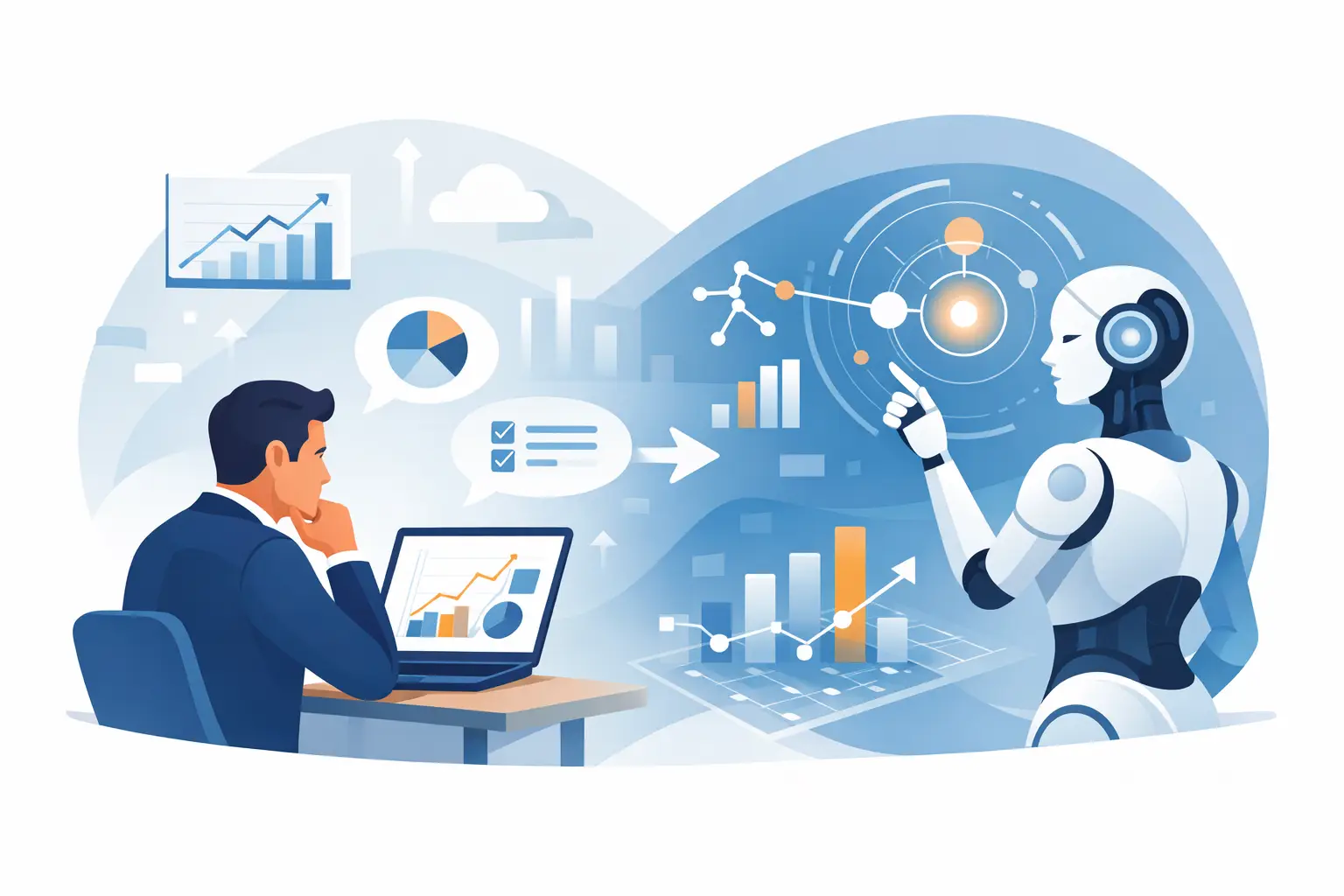
A good business leader doesn’t always lack information. Often, they have too much of it, too late, in too many different tools. That is exactly where an AI-assisted decision-making system becomes useful. Not to replace a manager’s judgment, but to help them see more clearly, more quickly, and act with greater confidence.
In an SME, decisions are rarely made in a laboratory. They are made between two customer follow-ups, a stockout, a margin variance and an employee waiting for an approval. When data is scattered across the CRM, the accounting system, Excel files and internal messages, the risk isn’t just deciding slowly. The real risk is deciding based on an incomplete picture.
What is an AI-assisted decision-making system?
An AI-assisted decision-making system is a solution that analyzes data, detects trends, compares scenarios and suggests actions to support decision-making. It doesn’t make the call for the manager. It organizes the relevant information, highlights weak signals and reduces the amount of improvisation.
In practical terms, this can mean recommending which customer to follow up with first, flagging a risk of cost overruns on a project, predicting a drop in inventory before it becomes critical, or suggesting the best time to adjust operational capacity. The value doesn’t come solely from the algorithm. It comes from the right information arriving at the right time, in an understandable format.
For an SME, this is often more cost-effective than a major technology project. It doesn’t necessarily mean rebuilding the entire digital environment. In many cases, the system builds on the tools already in place and adds a layer of analysis, alerts or recommendations.
Why SMEs see quick gains with an AI-assisted decision-making system
Large companies have teams of analysts, complex dashboards and multi-level approval processes. An SME, on the other hand, has to move fast with fewer resources. That is precisely why AI applied to decision-making can have a rapid impact.
The first gain is time. Less time wasted consolidating figures, looking for the latest version of a report or manually validating a hunch. The second gain is consistency. When several managers make decisions based on different criteria, performance becomes hard to manage. A well-configured system standardizes signals and priorities.
The third gain, often underestimated, is fewer costly errors. A bad decision on purchasing, scheduling, pricing or accounts receivable management doesn’t have to be spectacular to cause harm. It only has to repeat itself every week. AI helps spot these gaps before they become a habit.
Where this type of system creates the most value
The answer depends on the company’s main friction point. There is no single universal model.
Sales and business development
An AI-assisted decision-making system can rank leads by their likelihood of converting, recommend which follow-ups to prioritize or detect opportunities that are stalling in the pipeline. For a sales team, this avoids treating every file with the same intensity.
In SMEs where growth depends on a small number of salespeople or on the owner, this prioritization changes a lot. You stop operating on gut feeling alone. You focus your efforts on measurable signals.
Operations and capacity
When production, projects or deliveries are under pressure, AI can identify bottlenecks, anticipate delays and suggest a better allocation of resources. It isn’t magic. If the starting data is weak, the recommendations will be limited. But even with an imperfect foundation, you can already spot useful trends.
In many Quebec SMEs, the problem isn’t a lack of data. It’s that the data doesn’t talk to each other. The system connects the dots between sales, procurement, labour and profitability.
Finance and management
In finance, the benefit is often immediate. Cash flow forecasting, anomaly detection, prioritizing accounts to collect, estimating customer risk, tracking margin variances by project or by category. This type of decision support allows managers to react earlier, before pressure turns into an emergency.
Customer service and experience
AI can also support service-related decisions. Which files are likely to escalate, which customers are showing signs of dissatisfaction, which types of requests are tying up the team unnecessarily. This isn’t just about automating responses. It’s about deciding better where to focus human attention.
What a good system absolutely must do
A useful system must be easy to use, even if the logic behind it is advanced. If the team needs extensive training to understand a recommendation, adoption will slow down.
It must also explain, at least in part, why a suggestion is being made. Managers don’t need to see every line of code. However, they do need to understand the key factors behind an alert or a prioritization. Without this minimum transparency, trust won’t follow.
Another critical point is integration. A good AI-assisted decision-making system shouldn’t force an SME to start from scratch. It must plug into the company’s real ecosystem, whether that’s an ERP, a CRM, an accounting tool or even certain working files still used every day.
Finally, it must be aligned with a real business decision. Many AI projects fail because they start with the technology instead of starting with the question. Which decision do we want to improve? How often? With what current cost of error? That is where value is built.
The limitations to know before deploying
An AI-assisted decision-making system is not an insurance policy against bad choices. If the data is incomplete, if processes are chaotic or if objectives are unclear, the tool won’t fix the problem on its own.
You also have to accept that an algorithmic recommendation isn’t always the right decision. In an SME, there are tacit variables that the data doesn’t capture yet: a strategic customer, a reality on the ground, an HR issue, unusual seasonality. The point of the system is to inform the decision, not to remove human discernment.
There is also a trade-off between speed and accuracy. A highly sophisticated model may require more data, more validation and more maintenance. In many contexts, a simpler but well-adopted solution produces more results than a theoretically perfect system.
How to implement an AI-assisted decision-making system without creating friction
The best approach is almost always gradual. You start with a specific decision that comes up often and has a clear financial or operational impact. For example, prioritizing customer follow-ups, forecasting project delays or detecting stockout risks.
Next, you map the data sources that are actually available. Not the ideal data. The existing data, with its limitations. This makes it possible to build a credible first use case rather than an overly ambitious project.
After that, you define a simple success indicator. Time saved, conversion rate, fewer errors, improved margins, fewer delays. If the project can’t be clearly evaluated, it will be hard to defend internally.
Then comes the step that is often overlooked: adoption. A high-performing system that isn’t used remains a cost. The best implementations are those that fit into work habits, with clear dashboards, useful alerts and understandable logic. That is also where a pragmatic approach like Synchro IA’s makes the difference: starting from the tools in place to deliver measurable gains more quickly.
The real change: deciding better, more often
What business leaders are looking for isn’t impressive technology. It’s a company that moves forward with less friction. A well-designed AI-assisted decision-making system helps people make better decisions every day, not just in major planning meetings.
And that is often the deciding factor. An SME doesn’t transform its performance with a single brilliant decision. It transforms it with hundreds of good decisions, repeated faster, with fewer blind spots. If your team still spends more time looking for information than acting on it, the problem isn’t a lack of effort. It may simply be time to better synchronize your data, your tools and your decisions.
What about your business?
Your game plan starts with an audit: an analysis of your real operations, a quantified report and a prioritized plan. The introductory meeting is free.