
Automated Customer Follow-Up for SMEs: What to Automate
Automated customer follow-up for SMEs: reduce oversights, speed up sales and keep follow-up consistent without overloading your teams.
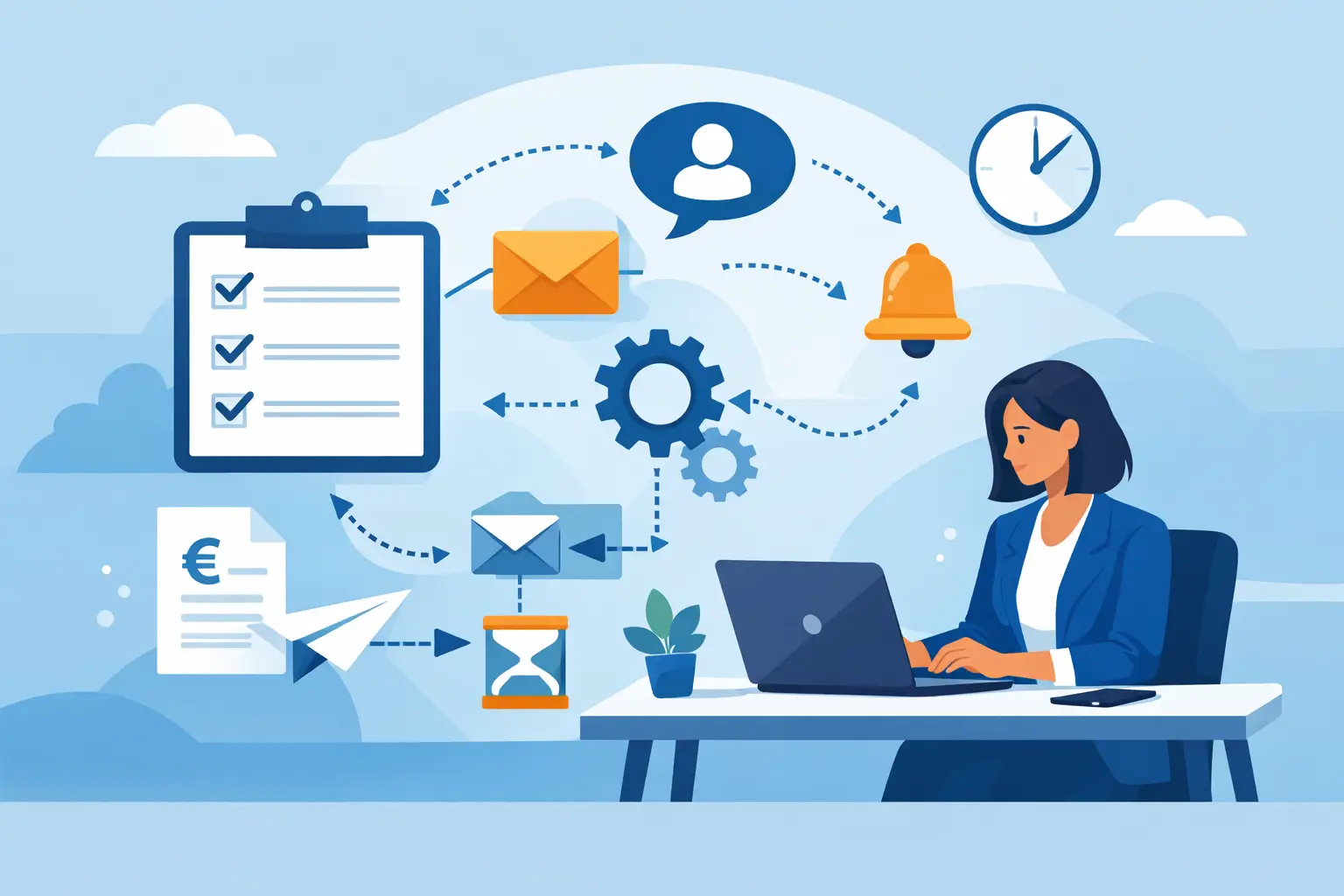
A customer asks for a quote, your team responds quickly, and then silence sets in. Two weeks later, nobody knows whether the deal is lost, postponed or simply forgotten in an overflowing inbox. This is exactly where automated customer follow-up for SMEs changes the game: it brings consistency back to sales follow-up without adding unnecessary load to your operations.
For an SME, the real problem is not just a lack of follow-ups. It is inconsistency. Some prospects get three follow-ups, others none. Some active customers are waiting for a reminder to renew, approve or pay. Meanwhile, teams think they are short on leads when they are already leaving value on the table.
Why Automated Customer Follow-Up Has a Direct Impact on SMEs
Well-automated follow-up is not about bombarding your contacts. It is about structuring the right message, at the right time, based on a real action: a quote request, an abandoned cart, an overdue invoice, an unconfirmed appointment, a proposal sent with no response.
The most visible gain is simple: fewer things slip through the cracks. But the most profitable gain lies elsewhere. When follow-ups become predictable, the sales cycle shortens, response rates rise and your employees spend less time doing sales admin by hand.
In many Quebec SMEs, customer follow-up still relies on manual reminders, notes in a partially filled CRM or sales reps' memories. This model can work on a small scale. As soon as volume rises, it creates leaks. And those leaks are costly because they hit revenue directly.
What to Automate First
A common mistake is trying to automate everything at once. In practice, the best results come from simple sequences tied to specific moments in the customer journey.
1. Follow-Up After a Quote or Proposal
This is often the first project to tackle. A quote goes out, then nothing happens for several days. An automated sequence can send a first reminder after 48 hours, a second a few days later with a clear question, then create an internal task if the customer remains silent.
This approach avoids two extremes: forgetting entirely and following up too insistently. It is especially useful in professional services, manufacturing, distribution and any environment where several quotes are in circulation at the same time.
2. Appointment Reminders and Confirmations
When a discovery call, demo or visit is not confirmed, the no-show rate climbs fast. An automated reminder by email or text message reduces that risk. You fill your schedule better without asking an internal resource to play digital receptionist.
3. Invoice Reminders
Here, automation directly affects cash flow. An invoice is sent, a reminder goes out before the due date, another on the due date, then a progressive follow-up if payment is late. It is not glamorous, but it is one of the most profitable uses.
The tone must remain professional and consistent with your customer relationship. Automating reminders does not mean dehumanizing collections. On the contrary, it lets you be firm, consistent and polite, without unnecessary emotion.
4. Post-Purchase Follow-Up
Many SMEs invest to acquire a customer and then let the relationship fade after the sale. Yet an automated message after delivery, installation or activation can open the door to a renewal, an upsell or a referral request.
Good Automation Does Not Start With the Tool
People often think the issue is technological. In reality, it is operational first. Before choosing a platform, you need to answer three questions: which events trigger a follow-up, which message is genuinely useful for the customer, and at what point a person needs to take over.
This is where many projects fail. The company buys a powerful tool but keeps fuzzy processes. The result: follow-ups go out at the wrong time, with incomplete data or a poorly calibrated tone.
Effective follow-up rests on simple logic. If a proposal is sent, wait a defined period. If the customer clicks, respond differently than if they do not open it. If the amount is high, assign a follow-up to the sales rep. If the customer has already bought, adapt the message. Automation becomes useful when it reflects your business reality, not when it applies a generic script.
Automated Customer Follow-Up for SMEs: Mistakes to Avoid
The first trap is over-automation. Not every follow-up should be automated the same way. A cold prospect who downloaded a document does not warrant the same level of persistence as a repeat buyer awaiting a renewal.
The second trap is an overly robotic message. SMEs have a natural advantage over large organizations: closeness. If your follow-ups sound like an impersonal system, you lose that advantage. Good automation keeps a human, clear and concise voice.
The third trap is a lack of segmentation. An identical reminder for everyone reduces effectiveness. A customer who is behind on payment, a lukewarm prospect and a past buyer are not at the same stage. Treating them the same creates noise instead of momentum.
Finally, there is the data problem. If your contacts are poorly classified, if your opportunity statuses are unreliable or if your invoicing is not properly synchronized, automation amplifies the mess. It does not fix it.
How to Add Follow-Up Without Rebuilding Your Whole System
This is often the real question for business leaders. Nobody wants to launch a six-month project just to do better follow-ups. The good news is that automated customer follow-up for an SME can often be set up using the tools already in place: CRM, inbox, quoting platform, invoicing software, calendar or web forms.
The point is not to replace your entire environment. It is to get information flowing between your systems to trigger the right actions. A completed form can create a contact. A quote that goes out can start a sequence. An overdue invoice can generate a reminder. A booked appointment can trigger a confirmation.
This approach reduces friction during deployment and speeds up the gains. For an SME, it is often the only realistic way to get quick results without disrupting day-to-day operations.
The Indicators That Show Whether Your Automation Is Working
Automating for the sake of automating is pointless. You need to measure the effect on the ground. The useful indicators depend on your context, but some come up almost every time.
Look at the average response time after a quote is sent, the rate of confirmed appointments, the on-time payment rate, the proportion of opportunities followed up on time and the administrative time saved by the team. If these numbers move in the right direction, your automation is working for you.
You should also watch for qualitative signals. Are salespeople spending less time digging through their notes? Are customers responding with less confusion? Do managers have better visibility into pending files? Often, the operational gains show up even before the full impact on revenue.
What AI Can Add to Automated Customer Follow-Up for SMEs
Traditional automation follows rules. AI, for its part, can add intelligence to follow-up. It can help prioritize the files most likely to respond, adapt the tone of the message to the context, suggest the best time to send or detect signs of disengagement in conversations.
That said, you need to stay pragmatic. Not every SME needs a predictive engine from the outset. In many cases, a well-designed sequence fed by good data already delivers a quick return. AI becomes particularly interesting when volume is higher, customer journeys are varied or management wants to make better trade-offs in sales efforts.
It is precisely within this logic of gradual deployment that an agency like Synchro IA can create value: starting from concrete irritants, connecting existing tools and building automation that produces measurable results without complicating day-to-day work.
Start Small, but Start Right
If you want to move fast, choose a single high-impact scenario. Following up on unanswered quotes is often an excellent starting point. It is simple to understand, easy to measure and directly tied to revenue.
Next, validate the process, adjust the messages, observe how customers react and only then expand to invoicing, appointments or after-sales. This progression avoids overly heavy projects and helps build a lasting discipline.
The best automation is not the one that does everything. It is the one your team actually uses, that your customers receive well and that turns forgotten follow-ups into opportunities handled at the right time. For an SME, this difference seems modest at first. Over a full year, it often becomes very visible in sales, in cash flow and in the time your teams get back.
What about your business?
Your game plan starts with an audit: an analysis of your real operations, a quantified report and a prioritized plan. The introductory meeting is free.